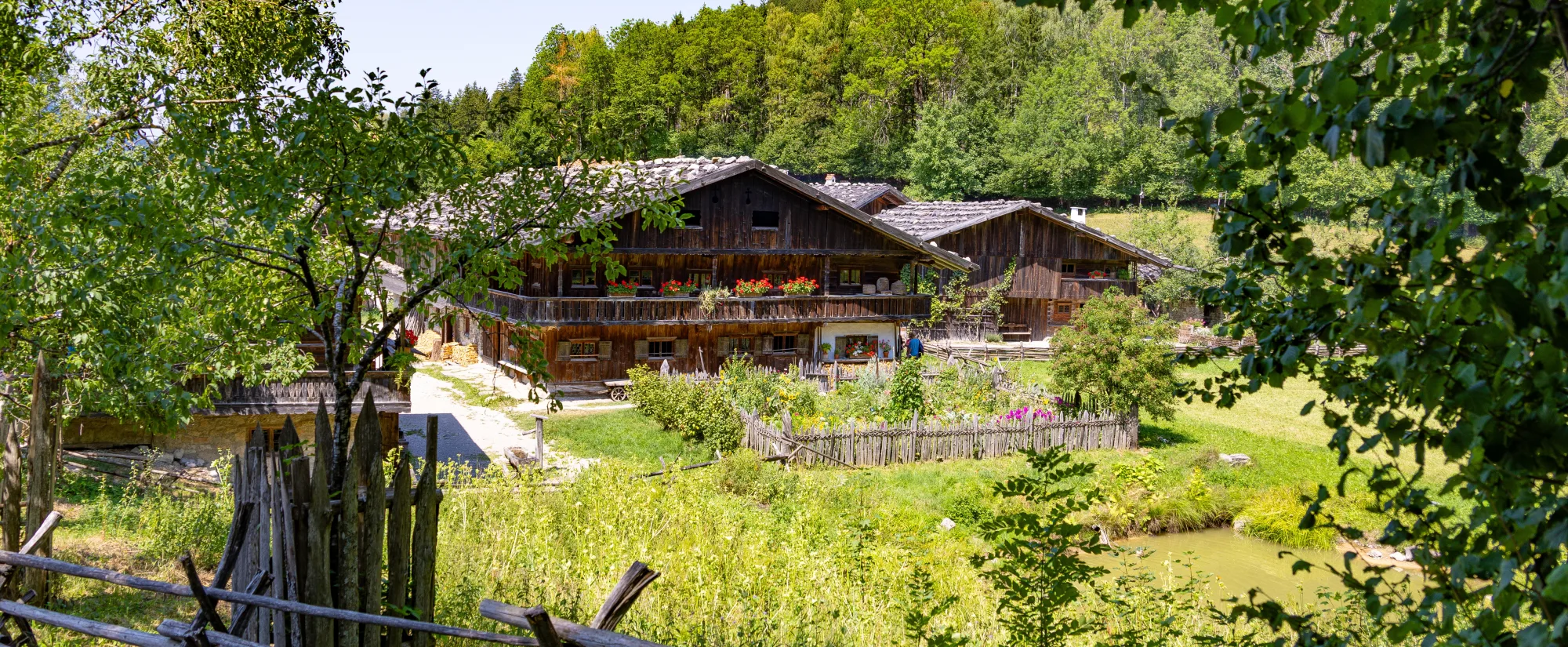
But the craftsmanship is what stuck, and it's what grew into a village on the Schliersee that will soon count nearly 20 houses.
Video-Folge von Spotify. Beim Laden werden Daten an Spotify übertragen.
Not About the Olympics, But About What Stayed
Most people know Markus Wasmeier as the double Olympic champion of 1994. Everything that can be said about that has been said. I was after something else: the story of the craftsman behind the athlete, the one that in the end became what his name stands for today.
His father was a church painter and restorer. At 14, Wasmeier started an apprenticeship, first as a painter and varnisher, because they wouldn't let him train as a carpenter on account of his skiing. At 11, he helped plan the family's old barn and numbered the beams; the house dated back to 1700. At 16, he built his first roof frame entirely by himself. That's the through line, not the Olympics.
We recorded this episode in the winter room of the museum, a space that came from the Söllbachklause near Bad Wiessee. Loggers once worked and lived there. It's plain, unpretentious, and that's exactly the tone Wasmeier uses when he talks about his project. Anyone who wants to visit the museum can find more on my page about the open-air museum.
Three Moments That Stay With You
The First Attempt Was in the Tegernsee Valley, and It Fell Through on Financing
Originally, Wasmeier wanted to save old farmhouses in the Tegernsee valley from falling into ruin. The money never came together. Then his own plot of land on the Schliersee caught his eye. The town and the county were on board right away; the town even swapped land with a farmer so the access road would line up.
"I don't see myself as a museum, but as a go-between"
State-run open-air museums feel too museum-like to him. At his place there are no rope barriers; you can sit down in the rooms, take in the smell of the smoke kitchen, drink the beer that's brewed right there the old-fashioned way. The roughly 100 staff aren't there to keep watch, they're part of bringing it to life.
Pushback From the Town
"If Wasmeier builds that museum, the Leonhardi procession is done for," that's how the headwind started. Nearly two years of delay. Looking back, he says dryly: "You really have to earn that kind of envy." What stands out: he talks about it without bitterness, but without glossing it over either.
Why the Museum Isn't Supposed to Be a Museum
Wasmeier has a clear take on what an open-air museum should do, and what it shouldn't. "I like a room you can settle into and just enjoy. With all your senses." The smoke in the smoke kitchen, the warmth when the stove is lit, the beer brewed by a process that's 300 years old: he wants all of it to be felt, not described.
"The moment you put up a sign saying this is from the 17th century, that piece disappears on the spot. And please don't touch it any other way, and so on," Markus Wasmeier in conversation.
That only works because he doesn't run it as a state operation. The nonprofit association behind it is independent. "I don't have to ask any institution whether I'm allowed to do this. I'm too much of a free spirit in my thinking for that." The price: every round of financing runs through his name. Without the sports career and the access it gave him to partners and sponsorships, none of this could have been built.
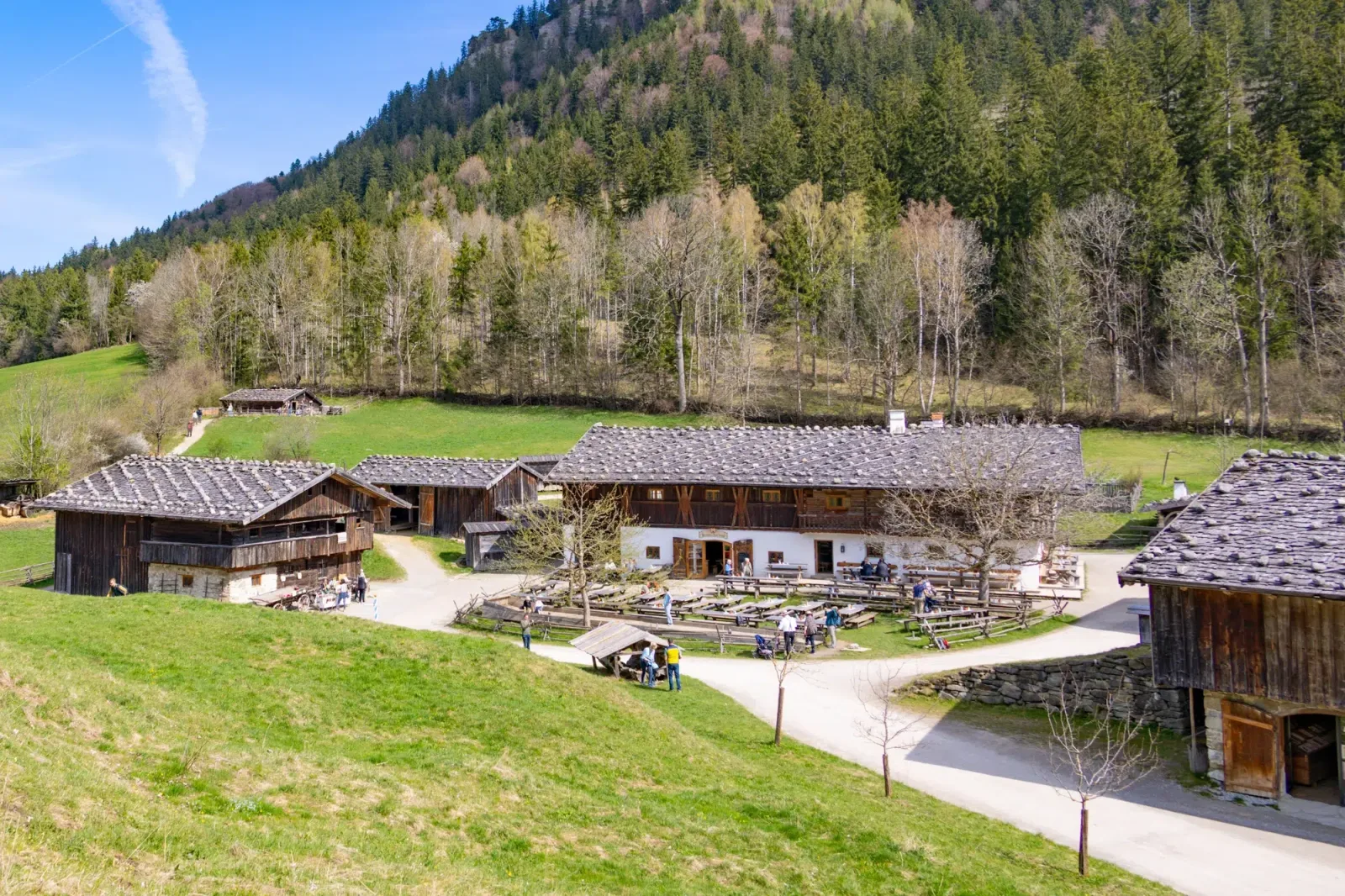
You can see it across the whole site: nearly 20 relocated houses, around 100,000 visitors over a seven-month season, its own brewery, its own bakery, its own distillery, a beer garden that genuinely delivers. Talking with him, it becomes clear that Wasmeier never sees the museum as a finished project. Every five to six years the shingle roofs have to be re-laid; building a single house takes three to seven years. That's the rhythm, not an opening date.
On top of that comes a political undertone I hadn't expected from the conversation: the plain statement of what gets lost when the old farmhouses disappear. "Then we'll be just like central or northern Germany." He doesn't mean it romantically; it's a stance against the erosion of the Upper Bavarian landscape. Anyone looking for the region on screen will find that same view under a different heading on the filming-location page.
What Surprised Me About This Conversation
I didn't go into this interview to talk about the 1994 Olympics. Enough has been written about that. What I was curious about is how a skier becomes the founder of a museum, and I already suspected there had to be a longer story behind it than the one you read in profiles.
Two things surprised me. First, how clearly Wasmeier lays out his position on the word "museum." He doesn't want to be the hundredth state-run open-air museum; he wants the opposite of that. No barriers, no signs telling you not to touch. To my mind, that's also what set it apart from other open-air museums in the region.
Second, how openly he talks about the rough stretches. Twice left without money, two years of delay because of the resistance in the town, the ongoing upkeep costs, those are sentences he doesn't smooth over. That's exactly why the episode is worth it even for people who already know the museum: it shows what's behind the village you walk through in a couple of hours as a visitor.