A firsthand report on stepping back in time into the bare-bones reality of centuries past.
This is how people really lived, here at Markus Wasmeier's open-air museum.
Schliersee-Neuhaus, a twelve-minute drive from Bayrischzell. A report from my first visit; a follow-up at the tavern is coming in May.
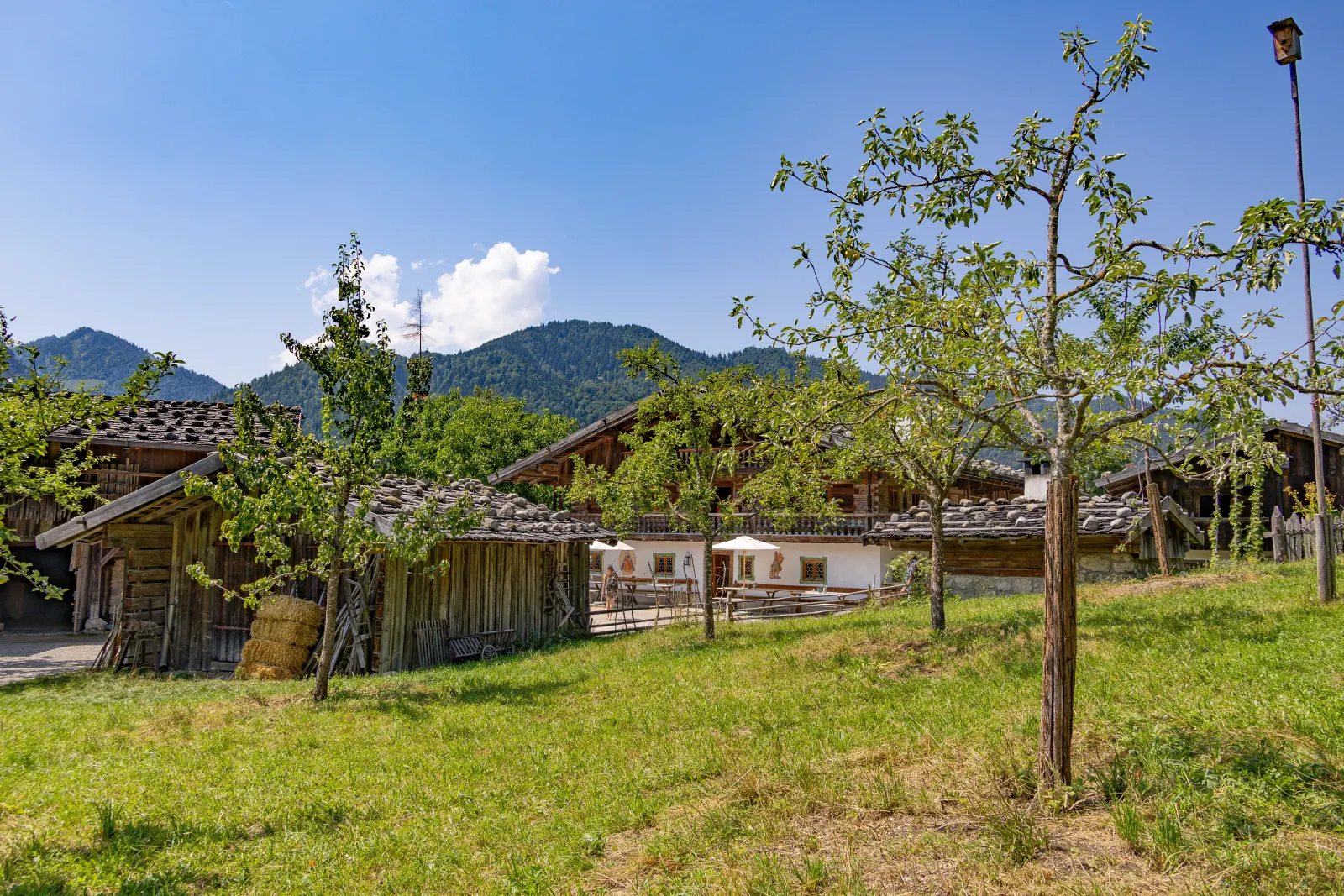
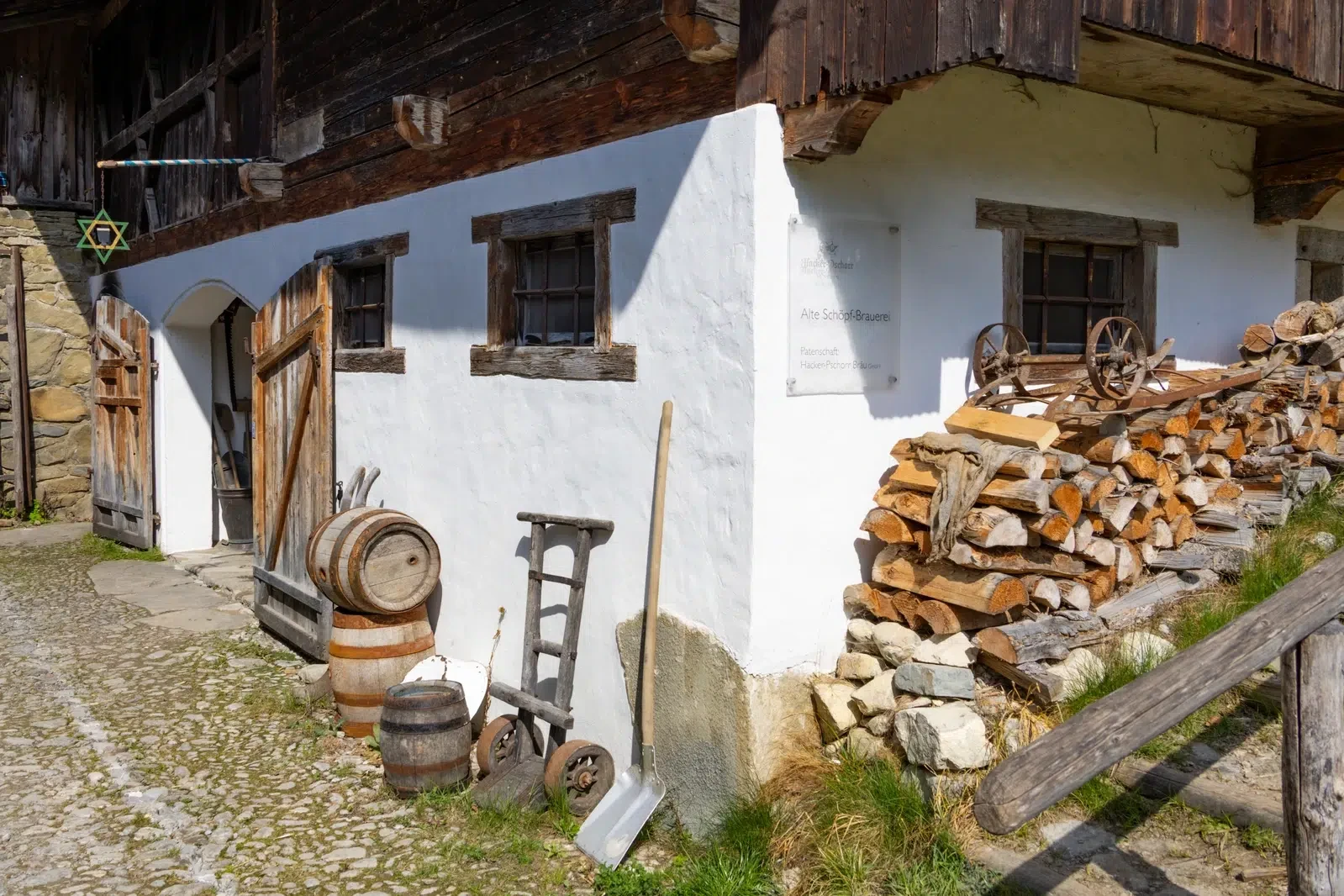
More than twenty historic farmsteads, houses, and a chapel from the Bavarian highlands, taken apart stone by stone and rebuilt right here. Plus a blacksmith, a cobbler, a baker, a distillery, animals, and gardens. A whole village out of the 18th and 19th centuries, one you can walk through, touch, and, if you lean in close, smell.
The alpine hut left me quiet
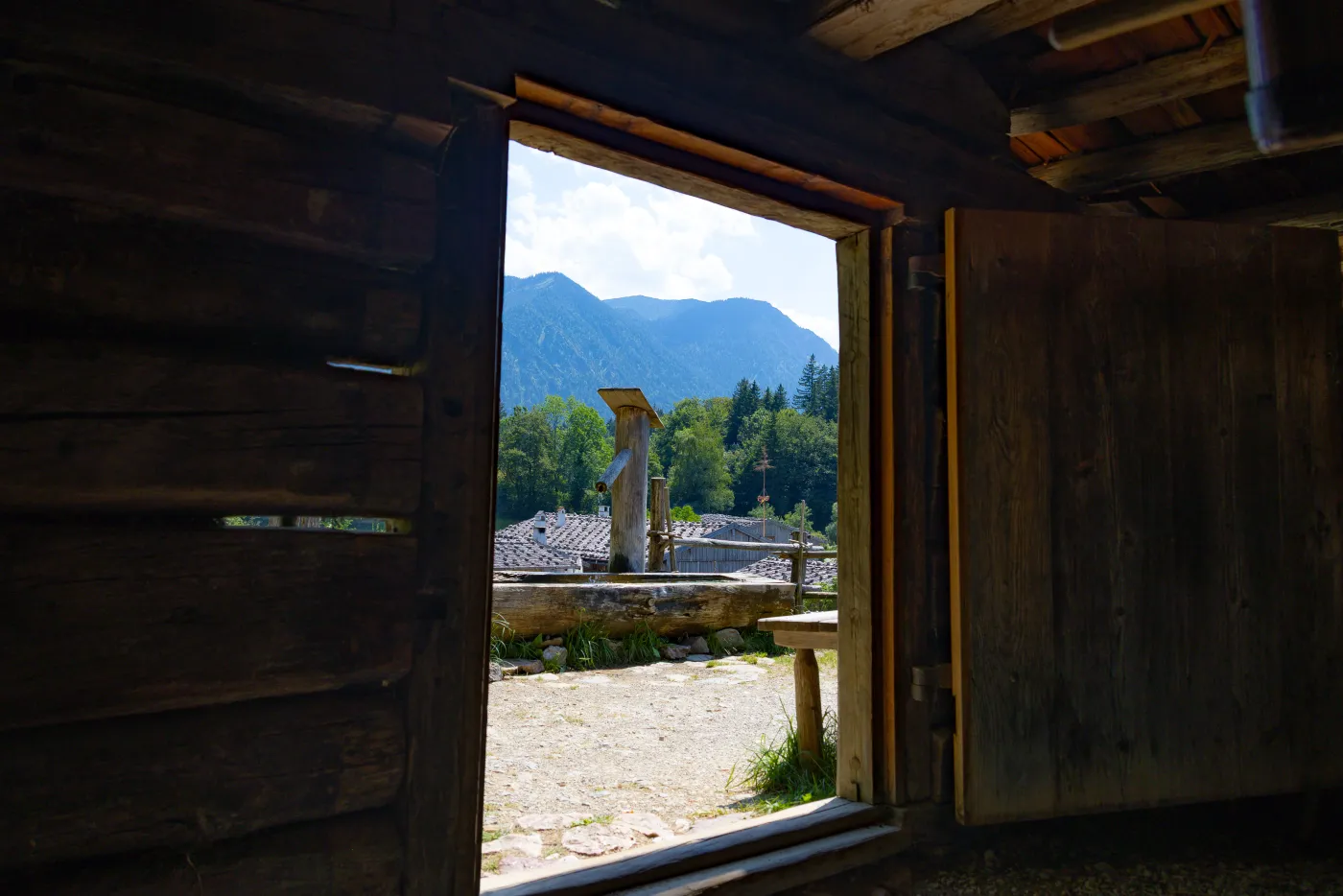

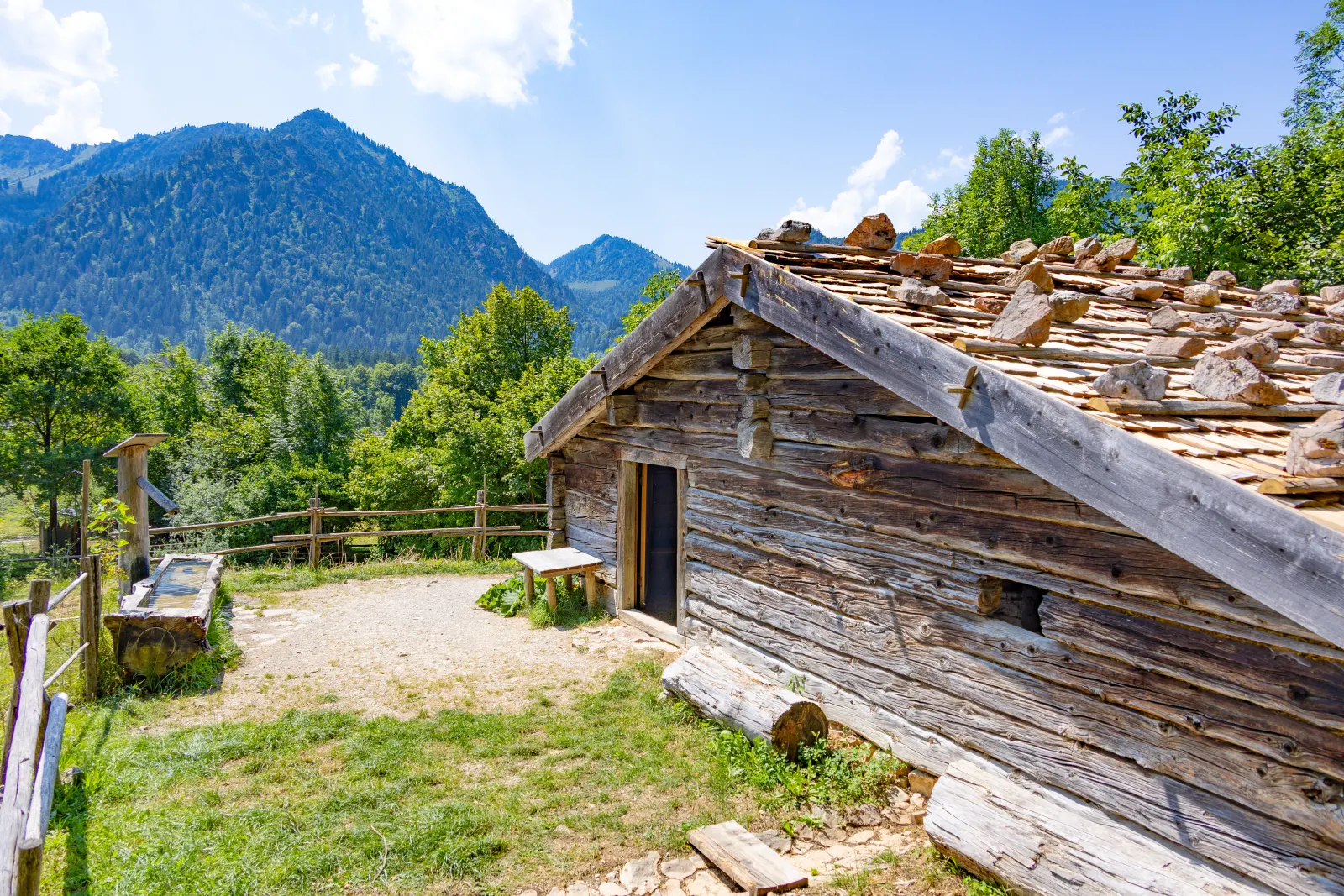
I stood in the little alpine hut and thought: wow. This is how people actually lived back then. Wooden plank beds, nothing else. No light except what came through the window. No water except what was in the bucket. No insulation except the thick beams.
That was the moment this museum flipped for me, from "an exhibit about farmhouses" to "time travel." You read all the time how bare-bones life was back then. But actually standing inside it, in the tight quarters, the smell, the dark, that hits completely differently.
Up front is the Kaskuchl, a single room, tamped-earth floor, beams of rough-hewn wood. On the left, an Alfa Laval cream separator the dairymaid used to skim cream from the milk. Beside it a brass cream kettle, a wooden trough, a milk tub. Whisks, ladles, and small wooden pails hang on the wall, every piece a working tool, nothing there for show. On the table sit an enamel pot, a milk jug, a painted cup. On the floor in front of it, wooden clogs. Back in the corner, a broom made of twigs. Above the door, a crucifix.
The Riederhof, where it all began
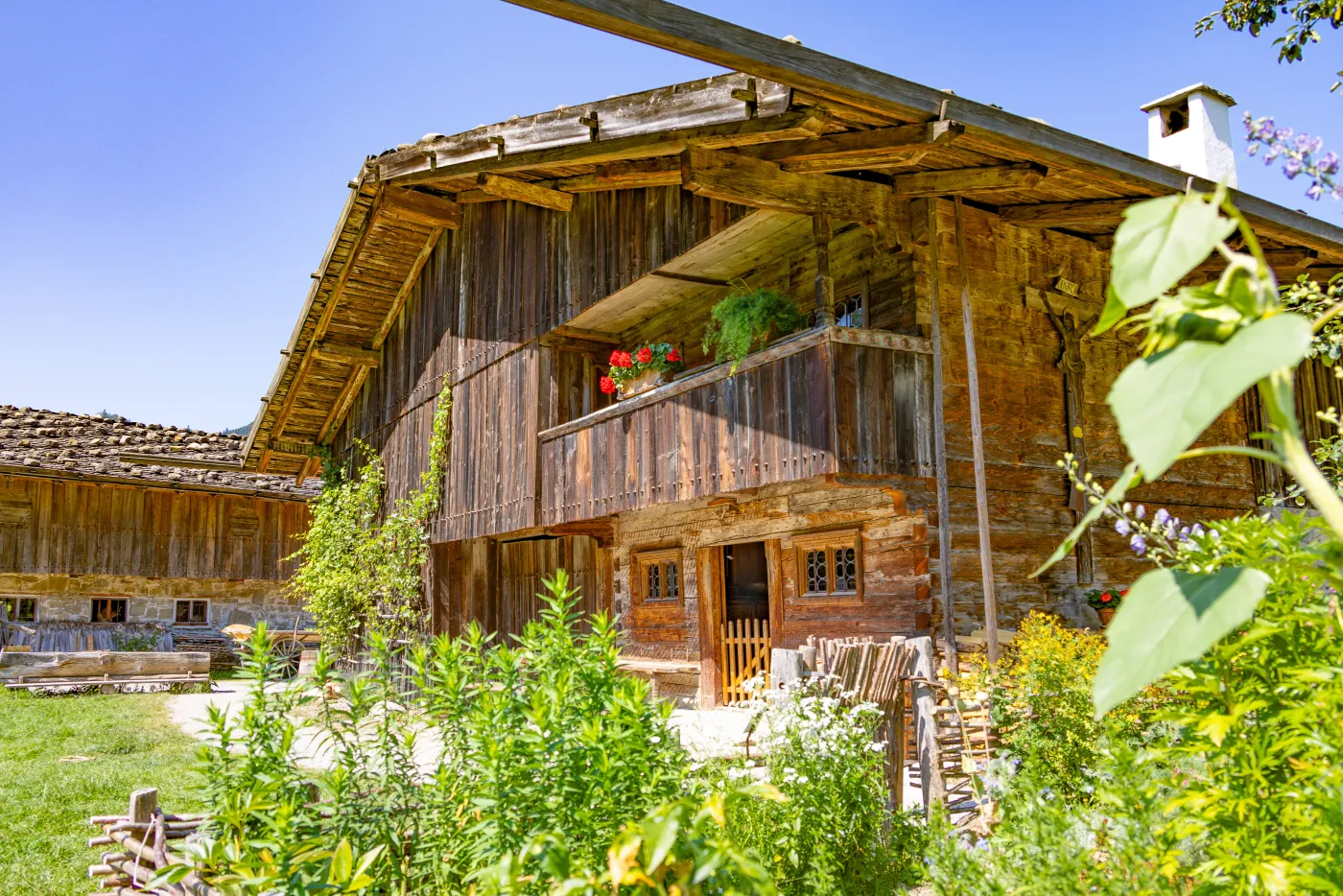
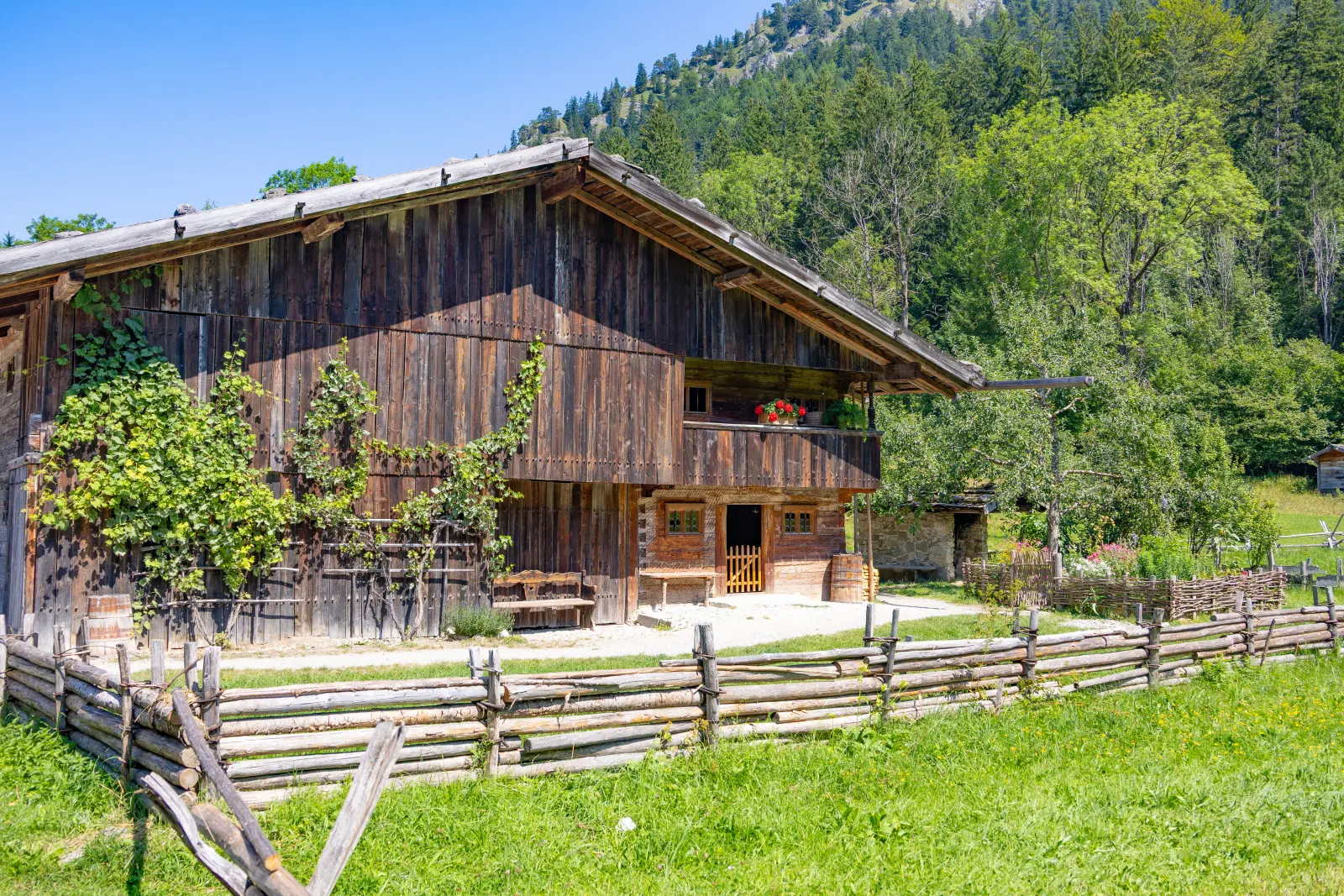
The Riederhof from Geitau, yes, Geitau, basically just around the corner, was the first building rebuilt here. Living quarters and barn under one roof, the way it was done back then. And it's the only farmstead in the museum with its original furnishings from around 1730.
You can feel it. The room doesn't feel staged, it feels simply present. Anyone drawn to the very beginning of the story, to the plainest, earliest form of the farmstead, lingers here the longest.
Trades that have all but vanished

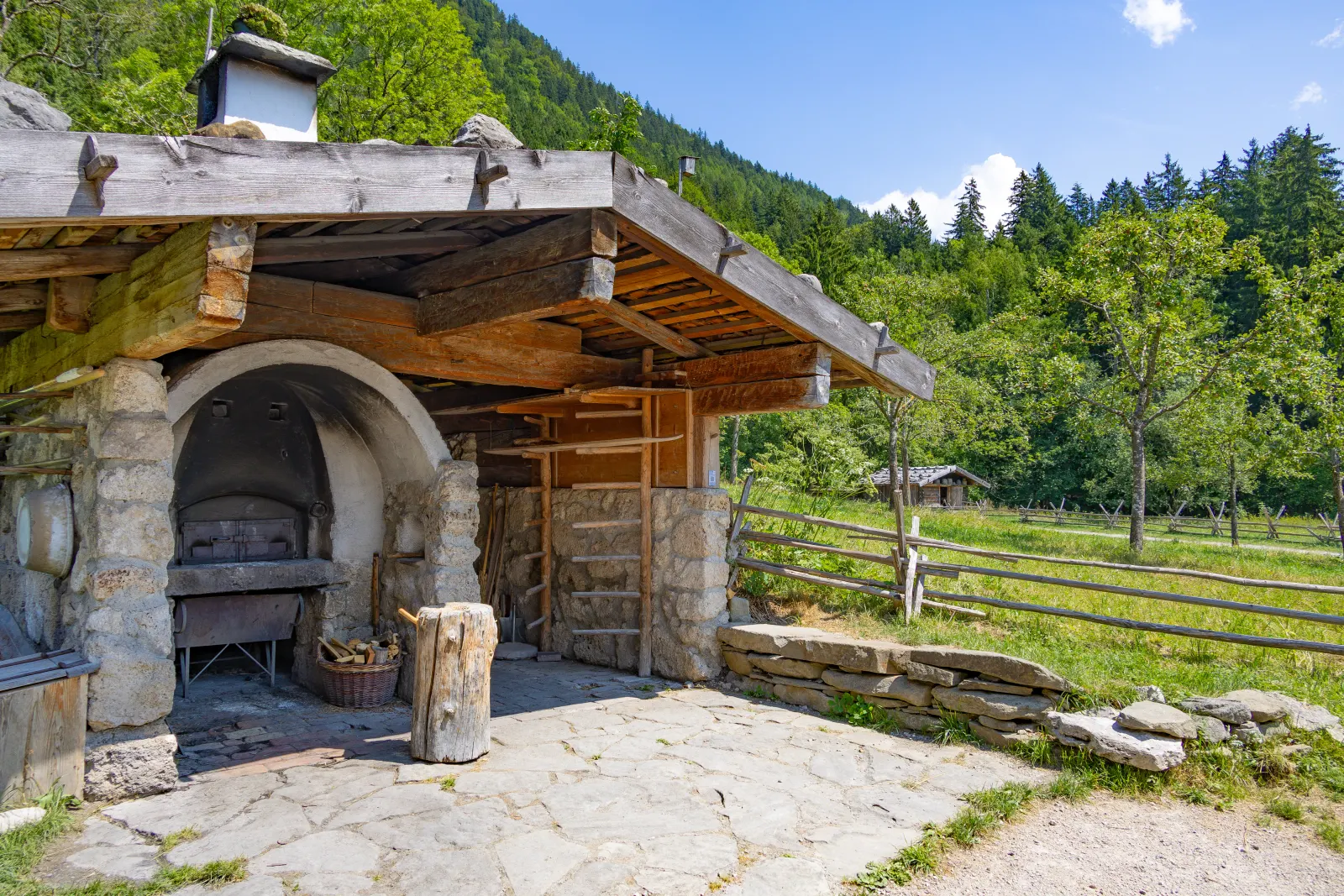
In the craftsmen's house, they're actually working. Blacksmith, cobbler, carpenter, distillery. Not some show put on for the visitors, but people who know their trade and are showing it off.
What kept running through my head: most of these trades are either extinct or so thoroughly absorbed by industry that you never see them in everyday life anymore. Shoes are something you buy, not something you repair. Tools come from the hardware store. In the distillery they still distill the old way, which has become rare in Germany to begin with.
For kids, it's a big deal. But grown-ups, too, often stand in front of an anvil for ten minutes and can't tear themselves away.
A village chapel, painted by his father
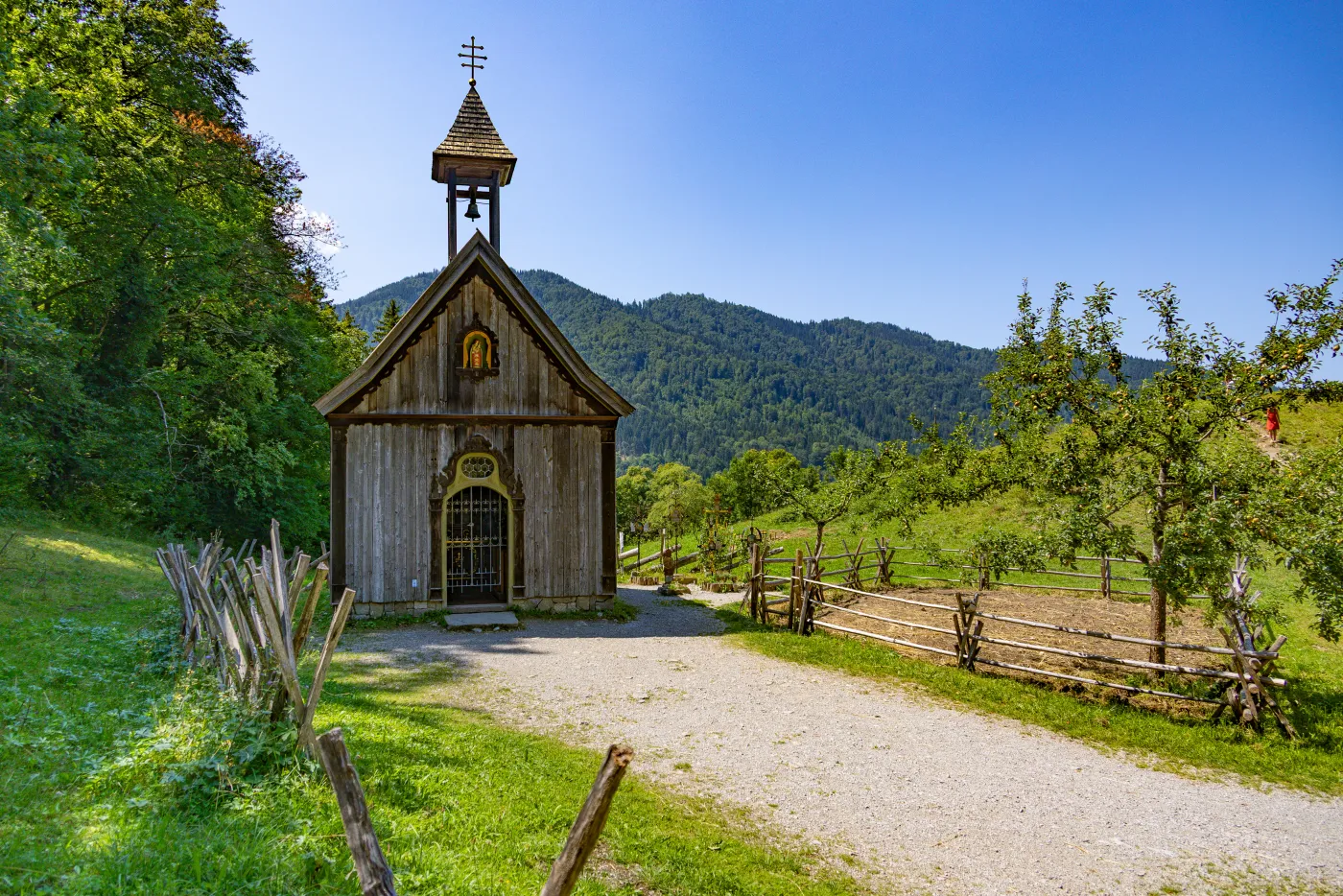
The Holy Cross Chapel stands in the village just like it would in any real Bavarian town. Room for twenty people, three years to build, consecrated in 2015. The ceiling paintings and the figures of the saints were done by Günther Wasmeier, Markus's father, a Lüftlmaler (Bavarian facade painter) and restorer. If you take the time and look up, you'll see the Mariahilf depiction with the four evangelists and the rural patron saints.
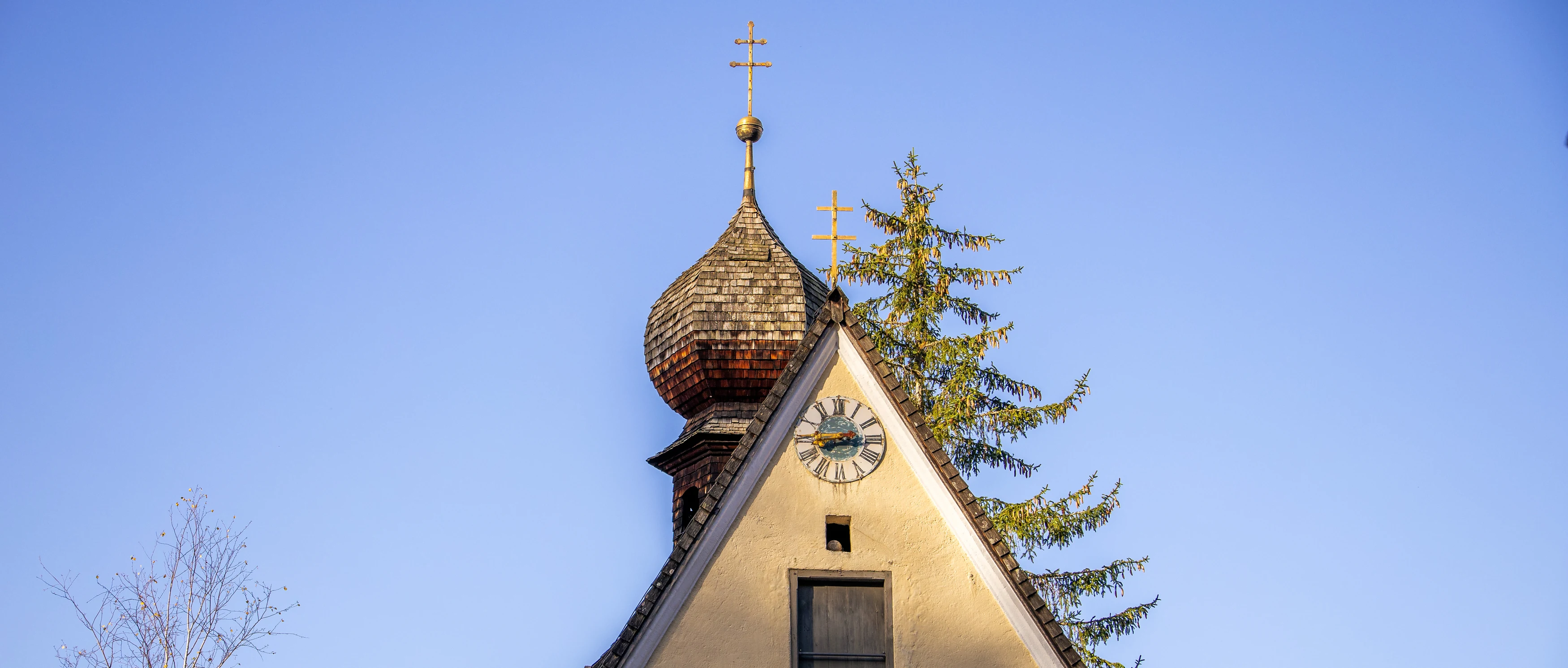
One detail caught my eye: the chapel is topped by a cross with three crossbars. The classic Scheyern cross, the reliquary cross from Scheyern Abbey, widespread across Bavaria as a pilgrimage symbol, actually has only two crossbars. But you'll find the same peculiarity on the parish church in Fischbachau, which has a direct historical link to Scheyern. Andreas Estner, who knows the region's history as a chronicler like few others, puts it this way: the three bars apparently came about out of some local impulse, and to this day nobody knows exactly why. A quiet thread of local character that runs all the way from Fischbachau to Markus's museum village.
The "Zum Wofen" tavern
I didn't go inside on my first visit.
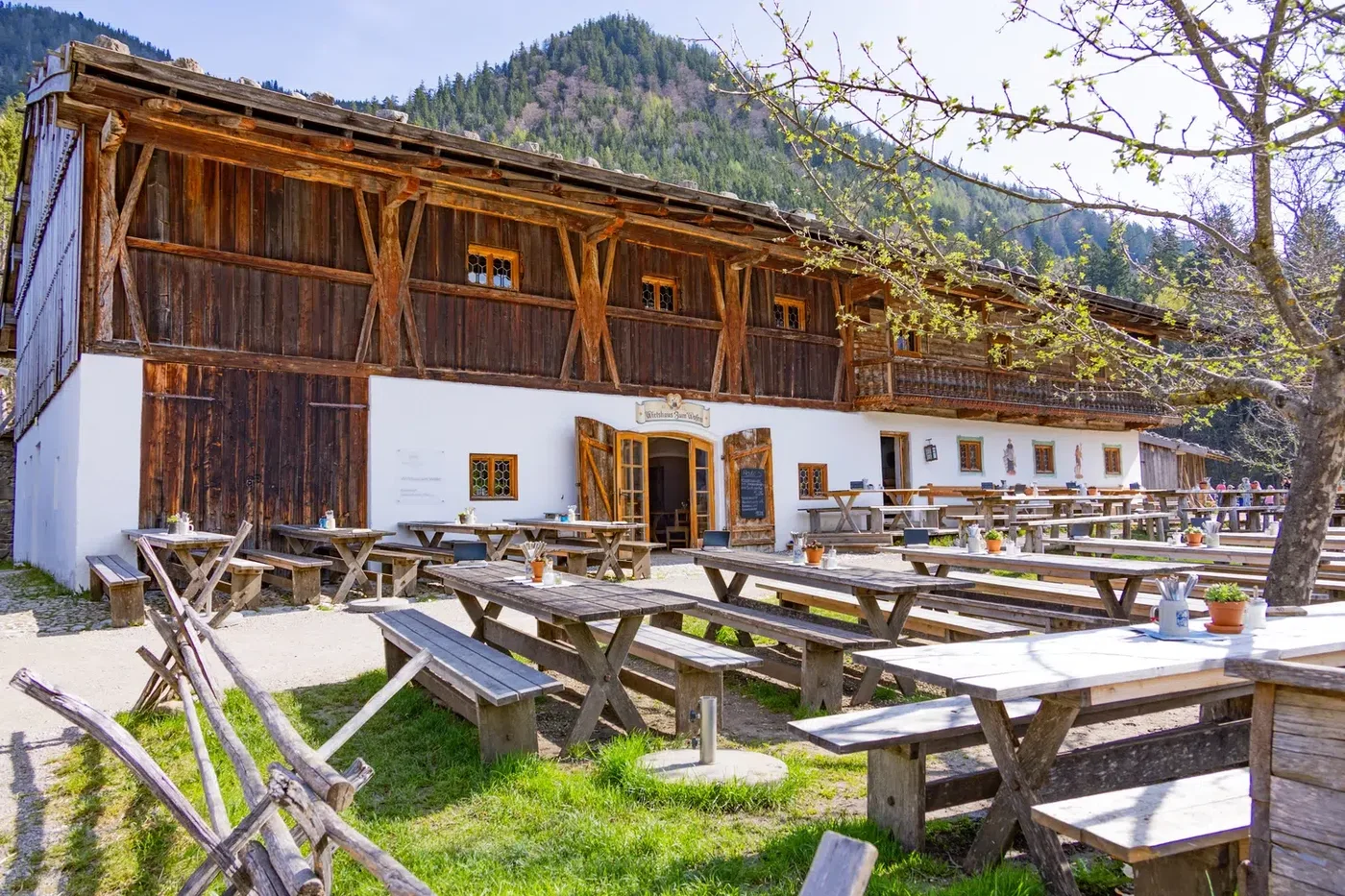
It was the weekend, the tavern was packed, and the tables had reserved signs on them.
If you're coming on a weekend: make a reservation. The vaulted room seats eighty, the tavern is the largest building in the museum, the kitchen is regional, and the beer comes from the estate's own historic gravity brewery, brewed the way it has been for three hundred years.
A return trip is on the calendar for May. As soon as I've tried the tavern myself, I'll add an honest take here.
Discovered on my second visit: the electricity museum in the Lukashof
In August I went out once more, and this time I took on the Lukashof. The house is one of the oldest surviving farmsteads from the Tegernsee valley: the trees for it were felled in 1510, by 1513 the farm was finished, and people and animals lived under one roof.
Today it holds the exhibition on how Upper Bavaria got its electricity, and it genuinely impressed me. It starts in the late 19th century, when power first reached these valleys, and then you find yourself in front of kitchens from 1900 through the 1970s, complete with the cult appliances of their day. Among all the farmhouses this is a surprising change of subject, and that is exactly why it works: the everyday appliances show you how quickly life in these valleys changed.

Give yourself an extra half hour for it, it is worth it.
When to come, how long to stay, where to park
Plan your time. My daughter and I spent three and a half to four hours in the village, taking in the houses, the crafts, and just wandering at an easy pace. That's the amount of time it takes to let it all sink in without rushing. Under two hours and it turns into a shallow lap.
When to come. On weekdays it's normally busy. On weekends I'd either arrive right at opening at ten, or about three hours before closing, when the day-trippers start heading out and things quiet down.
Parking. The museum lot fills up fast on nice weekends. If there's nothing free, head over to the train station lot in Neuhaus, right across from the museum lot. From there it's a two-minute walk.
Getting there without a car. Take the Bayerische Regiobahn (BRB) to the Neuhaus (Schliersee) stop. From Bayrischzell you'll ride the BRB one way, changing trains in Schliersee.
One of the best rainy-day tips in the area
The museum is outdoors, but not only outdoors. Nearly all the houses are walkable, the craftsmen's house, the tavern, the chapel, the exhibits. When it rains, you just hop from door to door.
For families with kids on a rained-out vacation day: probably the best tip in this corner between Bayrischzell and Schliersee.
There's always something going on at the museum
The village doesn't just live off its houses, it lives off the festivals and markets held there. A few dates worth checking when you're planning a trip:
Maypole festival on May 1. Raising the maypole in the village square in front of the tavern, live music, house-brewed Maibock from the museum's own brewery. 10 a.m. to 5 p.m.
Spring market with wreath-binding. The season opener in early spring, where craftspeople and florists show how door wreaths and bouquets are traditionally made.
Bavarian folk dancing in July. Bavarian dances you can join in on, led by dance masters, with rotating music groups. Beginner-friendly.
Historic craftsmen's market in October. Two days, with craftspeople from all over Bavaria, blacksmiths, basket weavers, weavers, potters, and more.
And spread across the whole season: brewing courses, wood-fired baking courses, herb walks, schnapps-distilling demonstrations. Dates and sign-up directly through the museum at wasmeier.de↗.
What pairs well with a visit
Slyrs distillery. Whisky from the Schliersee valley, a few minutes' drive from the museum, with a working distillery and tastings. A draw in its own right, and a page of its own is coming soon.
Josefstal waterfalls. South of Neuhaus, with access from the Fischhausen-Neuhaus train station (park there; Josefstaler Straße is for residents only). Three cascades along the Hachelbach stream, the first waterfall about ten minutes in, the full loop just under an hour, roughly 150 meters (about 500 ft) of elevation gain, easy and family-friendly. I haven't made it there myself yet; it'll get its own page once I have.
A walk around Lake Schliersee. Along the shore by the highway it's loud and unpleasant, and I avoid it. The nicer route runs behind, along the mountain and the rail line, with no traffic noise. A page on that is on the way.
My tip
Don't try to check off everything. The twenty-plus buildings aren't a to-do list. Pick out three or four houses to linger in, and just let the rest wash over you.
The museum on video
Video hosted on YouTube. Loading it sends data to Google/YouTube.
Photo gallery






On the map
Beim Laden der Karte werden Daten an OpenStreetMap übertragen.
- 1Markus-Wasmeier-Museum
Tipp: Auf einen Eintrag in der Liste oder direkt in der Karte tippen.